

TL;DR
Start with a manageable plan: choose a welcoming environment, learn a few basic strength movements, and schedule workouts you can repeat. You don’t need to feel confident before your first visit. At Embody Fitness in Austin, we help women build that confidence through guidance, trust, and practice.
How Do I Start Strength Training When Gyms Feel Intimidating? Begin with one supported visit. Tell your coach you’re new, explain your concerns, and focus on learning rather than lifting heavy. Leave with a clear next step and your next workout scheduled.
How Do I Start Strength Training When Gyms Feel Intimidating?
By Embody Fitness in Austin, TX — a boutique personal training studio that supports women with strength training
“Feel your feelings, and take one step toward the life you want to build.”
That’s what I would tell a woman sitting in her car outside the gym, wondering whether she can walk through the door.
I’m Lindsay, the founder of Embody Fitness. I understand that hesitation. Even as a coach and business owner, I feel uncomfortable when I try something unfamiliar, whether that’s Pilates, a new business challenge, or navigating a new stage of motherhood.
Being the beginner can feel emotionally difficult before you’ve done anything physical.
You’re allowed to feel nervous. You’re also allowed to begin!
Why Starting Can Feel So Intimidating
The concerns we hear often have little to do with choosing the perfect exercise.
Women worry about simply starting. They worry they can’t do it, that they’re too out of shape, or that they’ll fail.
An unfamiliar gym adds another layer: equipment you haven’t used, people who seem experienced, and uncertainty about where to go first.
Our coaching approach starts with acknowledging those feelings. We build trust, explain what comes next, and meet each client where she is today.
You don’t need to arrive knowing how to lift. That’s what we help you learn.
Make Your First Visit Easier Before You Arrive
When you’re asking, “How Do I Start Strength Training When Gyms Feel Intimidating?”, a clear plan can make that first visit feel more manageable.
Choose an Environment Where You Can Ask Questions
Before booking, ask:
- Do you regularly coach beginners?
- Will someone explain and demonstrate the exercises?
- Can movements be adjusted to my current abilities?
- What happens during the first session?
Listen for specific answers. You should understand how you’ll be supported.
Decide What Your First Visit Will Include
Keep the goal small: arrive, meet your coach, and learn a few movements.
At a conventional gym, you could book an equipment orientation or ask staff when the floor is quieter. If walking on the treadmill feels familiar, use it to settle into the space before learning a strength exercise.
Say What You Need
Try this:
“I’m new to strength training, and I feel intimidated. Can you show me where to start and help me choose an appropriate weight?”
You don’t have to hide your uncertainty. Giving your coach that information helps them guide you.
What Your First Session at Embody Looks Like
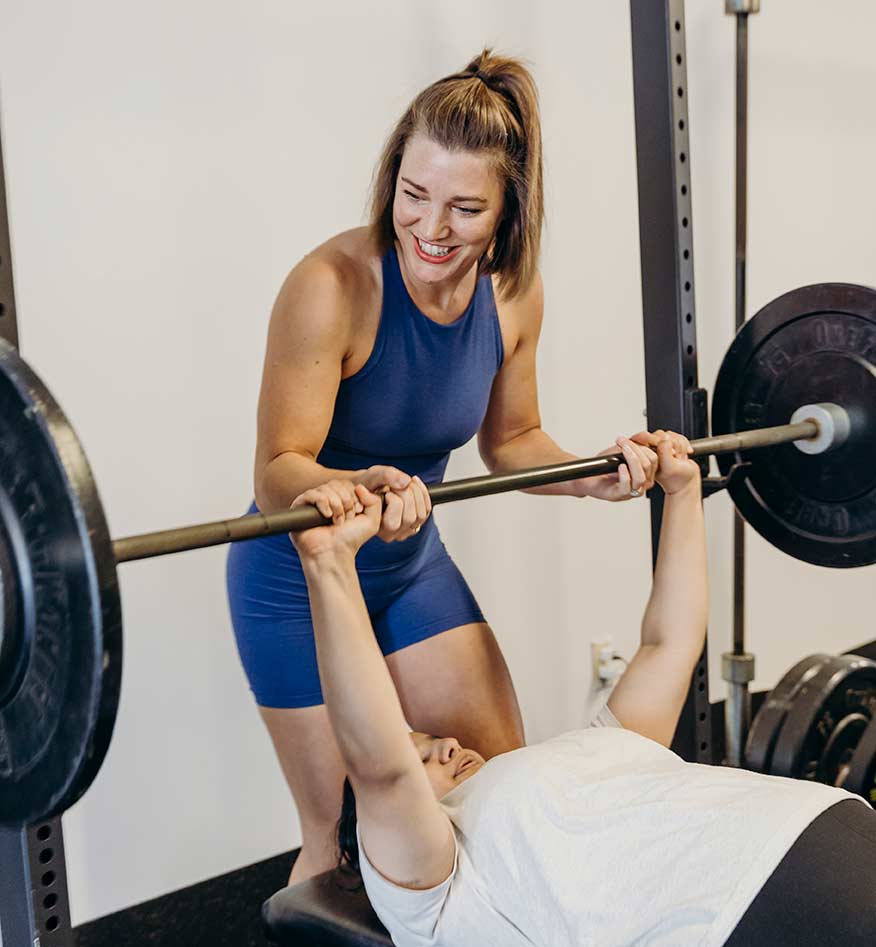
We begin with a conversation.
We ask about your goals, your current lifestyle, and what motivates you. We also want to understand what could make consistency difficult, whether that’s work, family responsibilities, or feeling unsure of yourself.
Then we guide you through a strength workout to understand your starting point.
Depending on your abilities, that may include squats, deadlifts, push-up variations, planks, glute bridges, and other core work. We explain the movements and adjust them as needed.
This gives us information we can use to plan your training. You don’t have to perform every exercise perfectly.
What We Pay Attention To
Alongside strength, we focus on:
- Breathing: learning how to breathe during a movement.
- Bracing: learning how to engage your midsection for support.
- Stability: maintaining control as you move.
- Mobility: finding a movement range you can use comfortably.
- Technique: understanding the setup and purpose of each exercise.
There’s a lot to learn, so we introduce it gradually.
A Practical First Month of Strength Training
My recommendation is to start small, repeat basic movements, and build from what you learn.
You don’t need a new exercise every session. Familiarity gives you an opportunity to practice.
Weeks 1–2: Learn the Routine
Choose workout times that fit your actual calendar. Two strength-training days per week is the general adult guideline, but someone starting from inactivity can build toward that gradually.
During these early visits, prioritize learning:
- Where you’ll train.
- How to set up your exercises.
- Which movement variations suit you.
- How to record what you did.
- When you’ll return.
A useful starting exercise selection might look like this, with a coach choosing the repetitions, weights, and variations:
| Movement | An approachable option | What to practice |
| Squat | Sit down to a bench and stand back up | A controlled pace and comfortable depth |
| Push | Push-up against a wall or raised surface | Keeping your body steady |
| Hip movement | Glute bridge; guided deadlift practice | Understanding the movement before adding weight |
| Pull | A machine or cable row with instruction | A controlled pull and return |
| Core | An adjusted plank | Breathing while maintaining your position |
Weeks 3–4: Repeat, Review, and Adjust
Keep practicing your basic movements. Notice what feels more familiar and what still needs explanation.
Then review with your coach. You may be ready for more repetitions, a small weight increase, or a different variation.
Change One Thing at a Time
Adding weight, repetitions, and complexity together can make progress harder to assess.
Instead, make one manageable adjustment. You don’t need to increase something every workout.
Is Strength training good for women in their 40’s?
Yes. General adult activity guidelines include muscle-strengthening exercise, and women in their 40s can begin with a plan suited to their current abilities and experience.
You don’t need a background in athletics to start learning.
Strength Training at 40 for beginners
At Embody, we consider your starting point and your lifestyle together.
A plan needs to fit the week you actually have. If you’re balancing work, children, and family commitments, choose repeatable appointments and a straightforward workout you understand.
When starting Strength Training at 40, give yourself room to learn. Ask questions, practice the basics, and let your progress guide the next adjustment.
What We’ve Learned From Coaching Intimidated Beginners
Many clients arrive feeling uncertain. We connect with them early, acknowledge their concerns, and help them experience what a supported workout feels like.
I’ve seen clients become more confident and empowered during their first month as they discover their strength. That’s an observation from our coaching experience, rather than a deadline every beginner needs to meet.
Confidence can show up in small ways:
- You recognize an exercise.
- You know how to set up.
- You ask for an adjustment without embarrassment.
- You return even though you still feel a little nervous.
These changes matter. They make the next visit easier to approach.
Build Consistency Before Complexity
One approach I disagree with is giving beginners too much work and too many complicated exercises immediately.
I prefer teaching a basic movement well and building from there. A reverse lunge, for example, gives us something to practice and develop before considering more complex exercises.
Your workout doesn’t need to look impressive to be useful.
If you miss a planned session, choose your next available appointment. If an exercise feels confusing, ask for another demonstration. If a workout is too difficult to repeat consistently, discuss an adjustment.
So, How Do I Start Strength Training When Gyms Feel Intimidating?
Give yourself a clear first step, a manageable routine, and support while you learn. You can begin before you feel completely ready.
Key Takeaways
- Start with one supported visit. Tell your coach you’re a beginner and explain what feels intimidating.
- Learn simple movements first. Practice technique before adding more weight or complexity.
- Choose a routine you can repeat. Schedule your next visit and build gradually.
- Notice small signs of confidence. Familiarity, questions, and returning all count as progress.
Try a Free Personal Training Session at Embody Fitness
You can arrive with questions, nerves, and no lifting experience.
At Embody Fitness in Austin, we’ll talk about your goals, guide you through a workout, and help you understand your next step. All new clients are offered a free personal training session.